
 WORKSHEET B1-B2
UNUSUAL DWARF GIRAFFES
Part 1. Warm-up
- What do you know about giraffes and where they live?
- Why do you think very tall animals like giraffes developed long necks?
- What dangers do wild animals face in nature today?
Part 2. Vocabulary focus
Part 3. Reading – Unusual Dwarf Giraffes
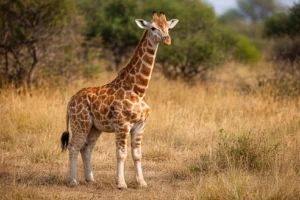
Researchers in Africa recently recorded two unusual wild giraffes. Both animals are adults, but they are much shorter than normal giraffes. They are only about nine feet (2.7 meters) tall, which is about half the height of a typical giraffe. Although the animals have long necks like other giraffes, their legs are much shorter. One of the giraffes was seen in Uganda, while the other was found in Namibia.
Giraffes live only in Africa. Scientists recognize nine different subspecies of giraffes. Each subspecies lives in a different region of the continent. Their habitats stretch from Chad in the north to South Africa in the south. These populations usually do not overlap. Each subspecies can be identified by slightly different coat patterns.
Giraffes are the tallest mammals on Earth. Adult giraffes can reach a height of about 20 feet (six meters). Despite their extremely long necks, giraffes have the same number of neck bones as humans. Both species have seven vertebrae in the neck. However, the giraffe’s vertebrae are much longer.
Because of their height, giraffes need very strong hearts. Their hearts must pump blood all the way up to the brain, which may be more than two meters above the heart.
Giraffes usually live in grasslands or open woodland areas. Their favourite food is the leaves, seedpods, and small branches of acacia trees. Many other animals cannot eat these leaves because they are toxic to them. Giraffes, however, can digest them safely. They also sometimes eat grass, fruit, and leaves from bushes.
A giraffe’s skin is extremely tough. This helps protect the animal when it walks through thorny plants and bushes.
Giraffes normally live in groups called herds. These groups can change in size but usually contain fewer than 30 animals. The members of a herd do not always stay close together.
Male giraffes often become more solitary as they get older. Female giraffes usually give birth to one calf at a time. A newborn giraffe is already very tall — about six feet (1.8 meters). Only a few hours after being born, the baby can stand up and begin to run.
Young giraffes face many dangers. Nile crocodiles, lions, hyenas, and leopards sometimes hunt them. Lions are the only predators strong enough to kill an adult giraffe. However, because giraffes are so large and powerful, lions often avoid attacking them.
The coat pattern of a giraffe is made up of dark patches separated by lighter areas of fur. These patches can be brown, black, or orange. The lighter areas are usually cream or white. As male giraffes get older, their patches often become darker.
These patterns also help giraffes hide in their environment. When they stand among trees and bushes, they are surprisingly difficult to see. Their bodies blend into the landscape very well.
Unfortunately, giraffe populations have declined significantly in recent decades. Over the last 30 years, the total number of giraffes in the wild has fallen by about 40 percent. Today there are only around 100,000 giraffes left.
Some subspecies are especially endangered. West African giraffes live in a small area of Niger, and fewer than 300 individuals remain. Another group, called Rothschild’s giraffes, lives in Uganda and Kenya. Scientists believe there are only about 700 of them left.
The biggest threats to giraffes are habitat loss and poaching. Habitat loss happens when human activities destroy or change natural environments. Poaching refers to illegal hunting. Poachers kill giraffes for their meat, skin, and other body parts.
Giraffe skin is very thick and strong, which makes it useful for producing items such as belts, bags, shoes, and drum covers. In some parts of Africa, giraffe tails are used as fly swatters.
The two unusual giraffes that researchers discovered are believed to have dwarfism. Dwarfism is a rare medical condition that affects growth and body development. It can occur in humans and domesticated animals such as dogs, cows, and pigs. However, it is extremely rare among wild animals.
Scientists jokingly say that these dwarf giraffes look as if someone attached a giraffe’s head and neck to the body of a horse.
Both of the dwarf giraffes are males. Researchers say it is surprising that they have survived in the wild for so long. Normally, giraffes defend themselves by running very fast or kicking predators with powerful legs. The dwarf giraffes cannot do this as effectively because of their shorter legs.
Their smaller size also makes feeding more difficult. Many acacia branches grow high in the trees, and the dwarf giraffes cannot reach them as easily as normal giraffes.
Researchers hope that they will be able to observe these unusual animals again in the future.
Part 4. Reading Comprehension
Part 5. Vocabulary – Gap-fill